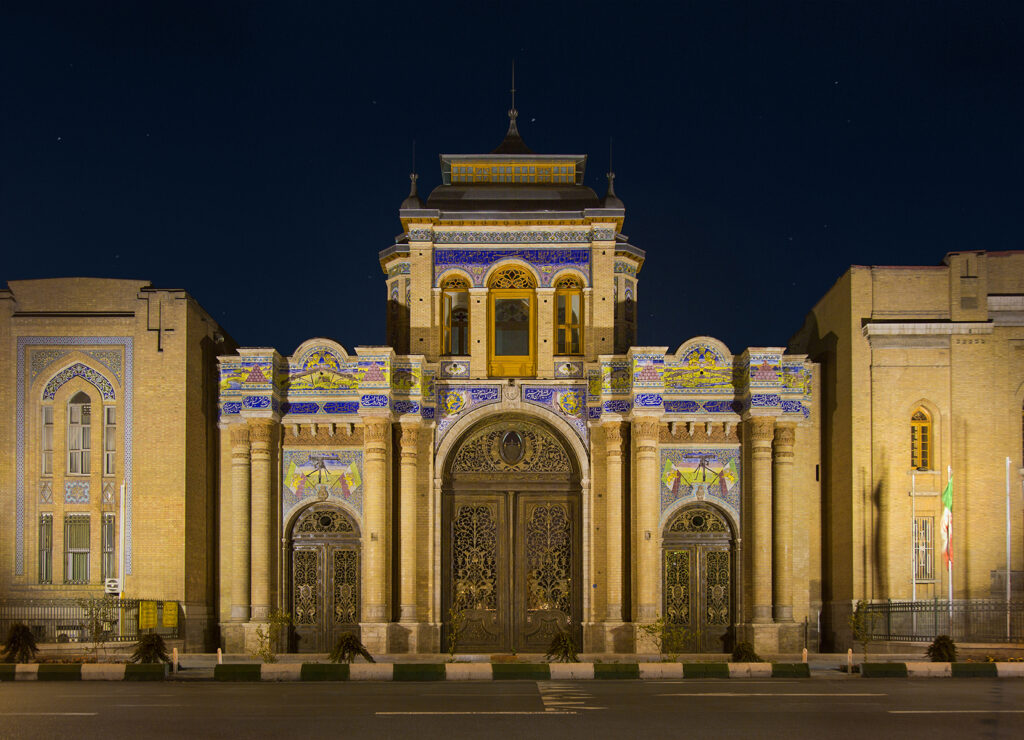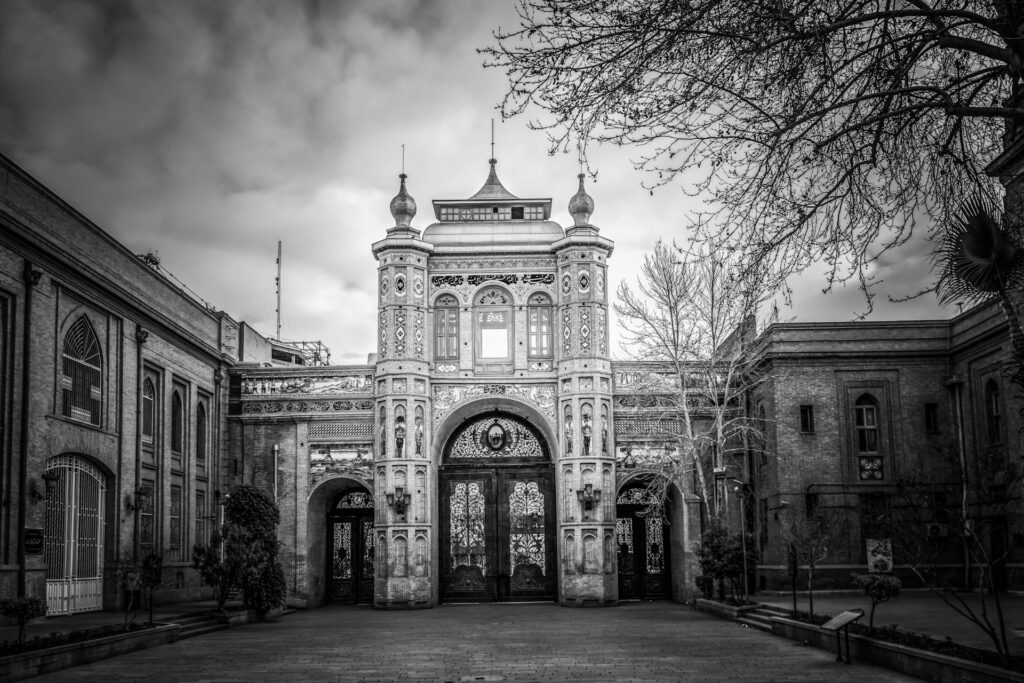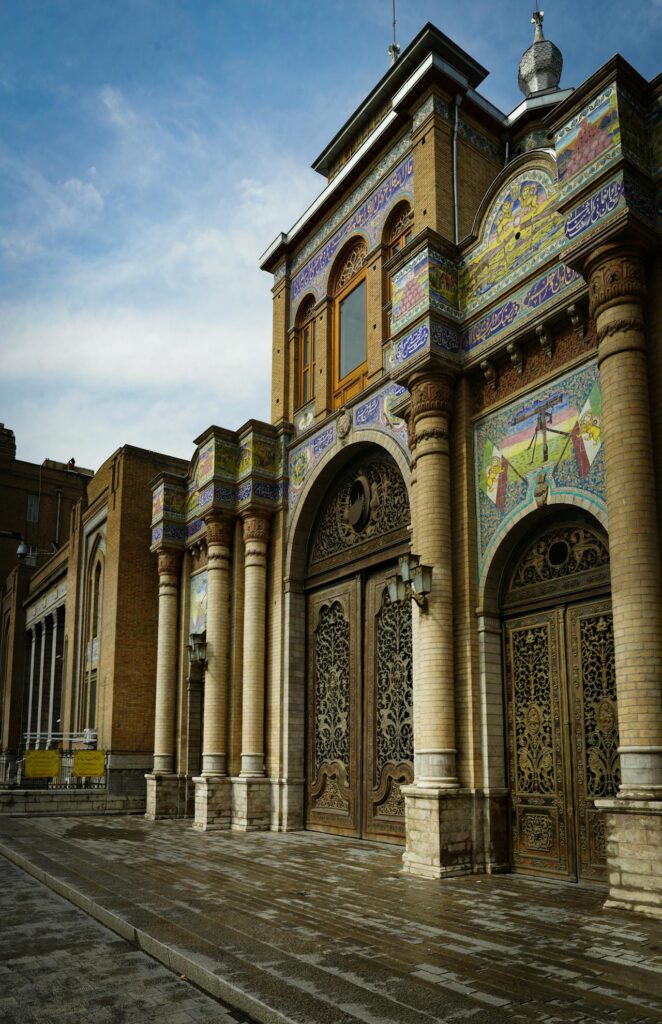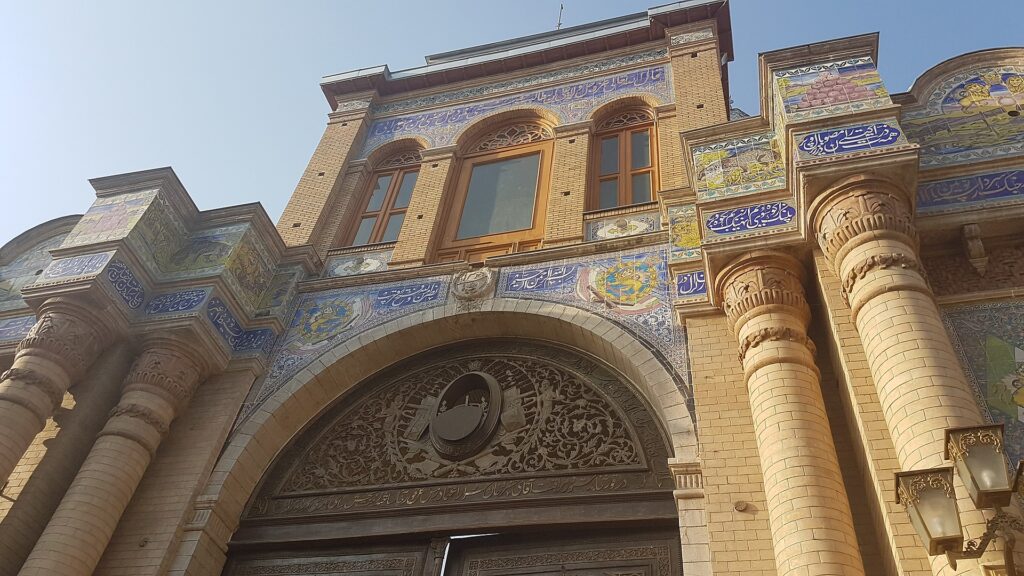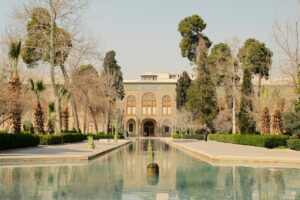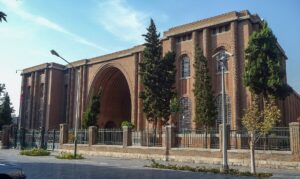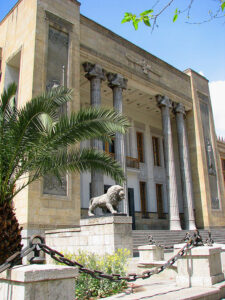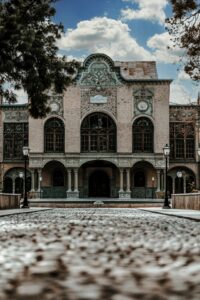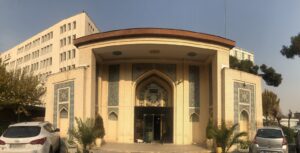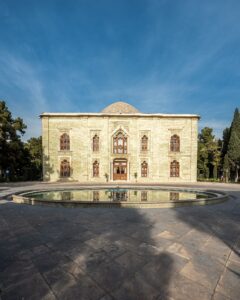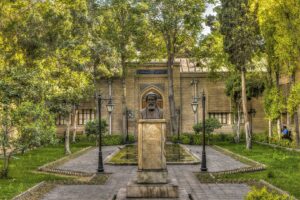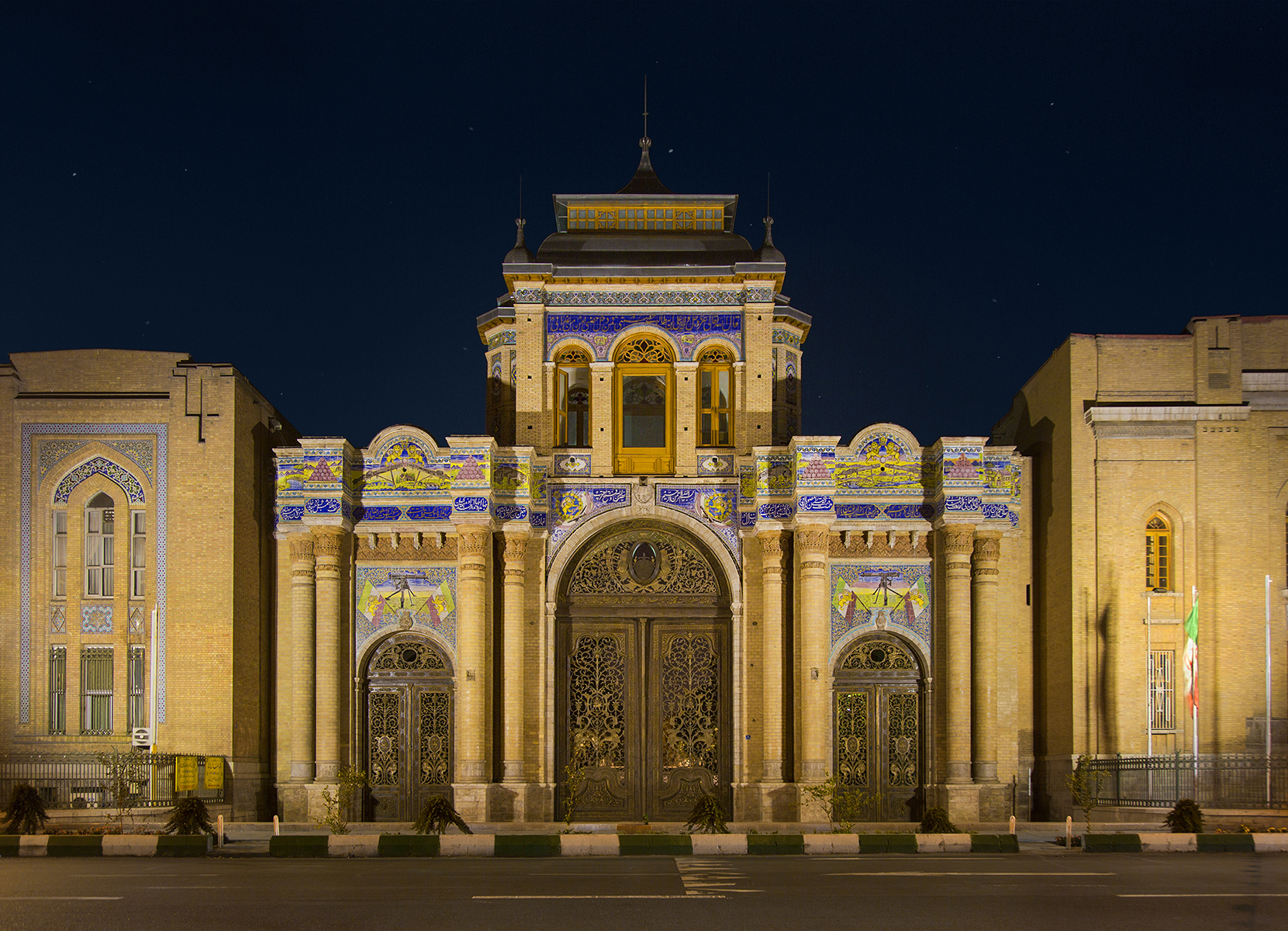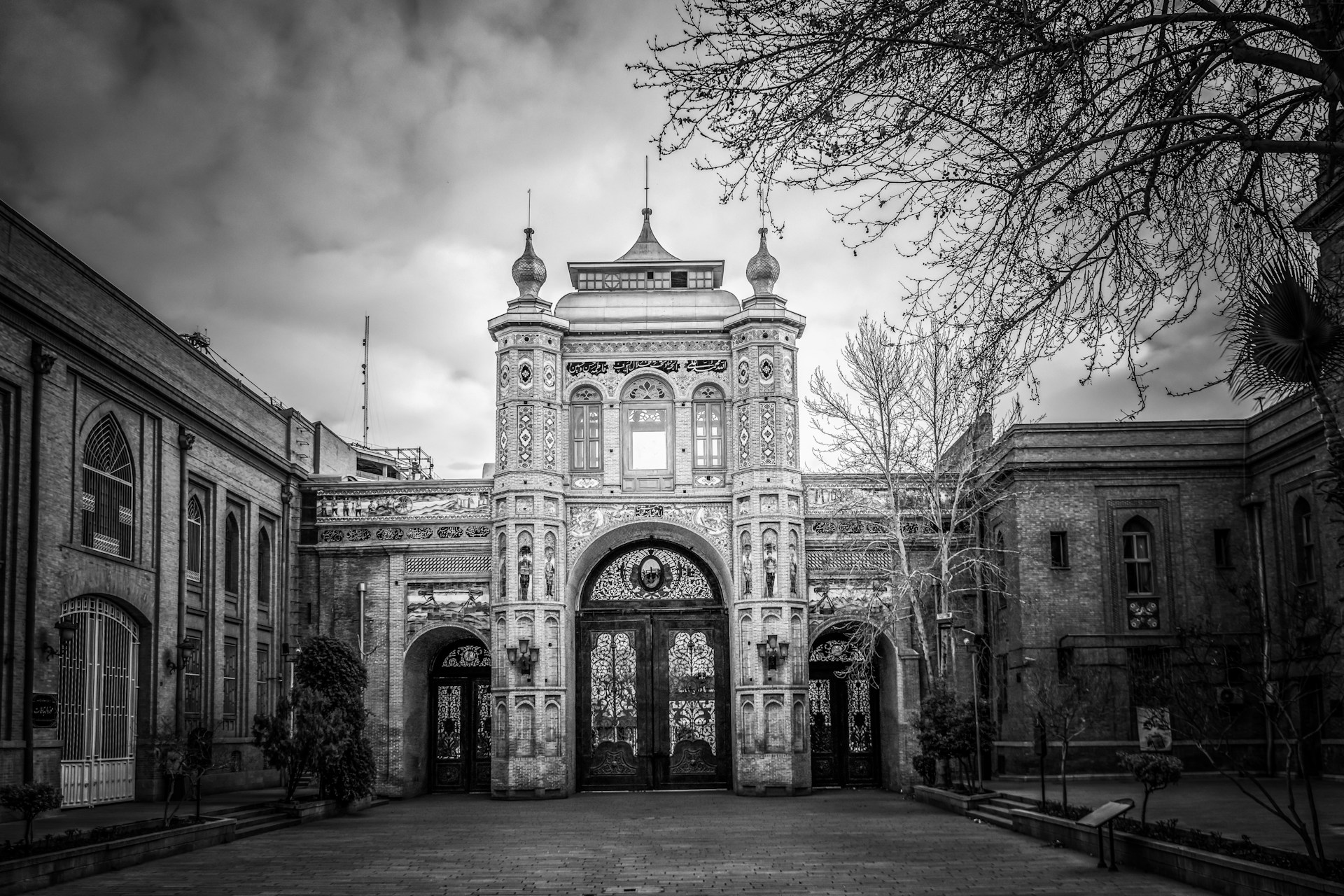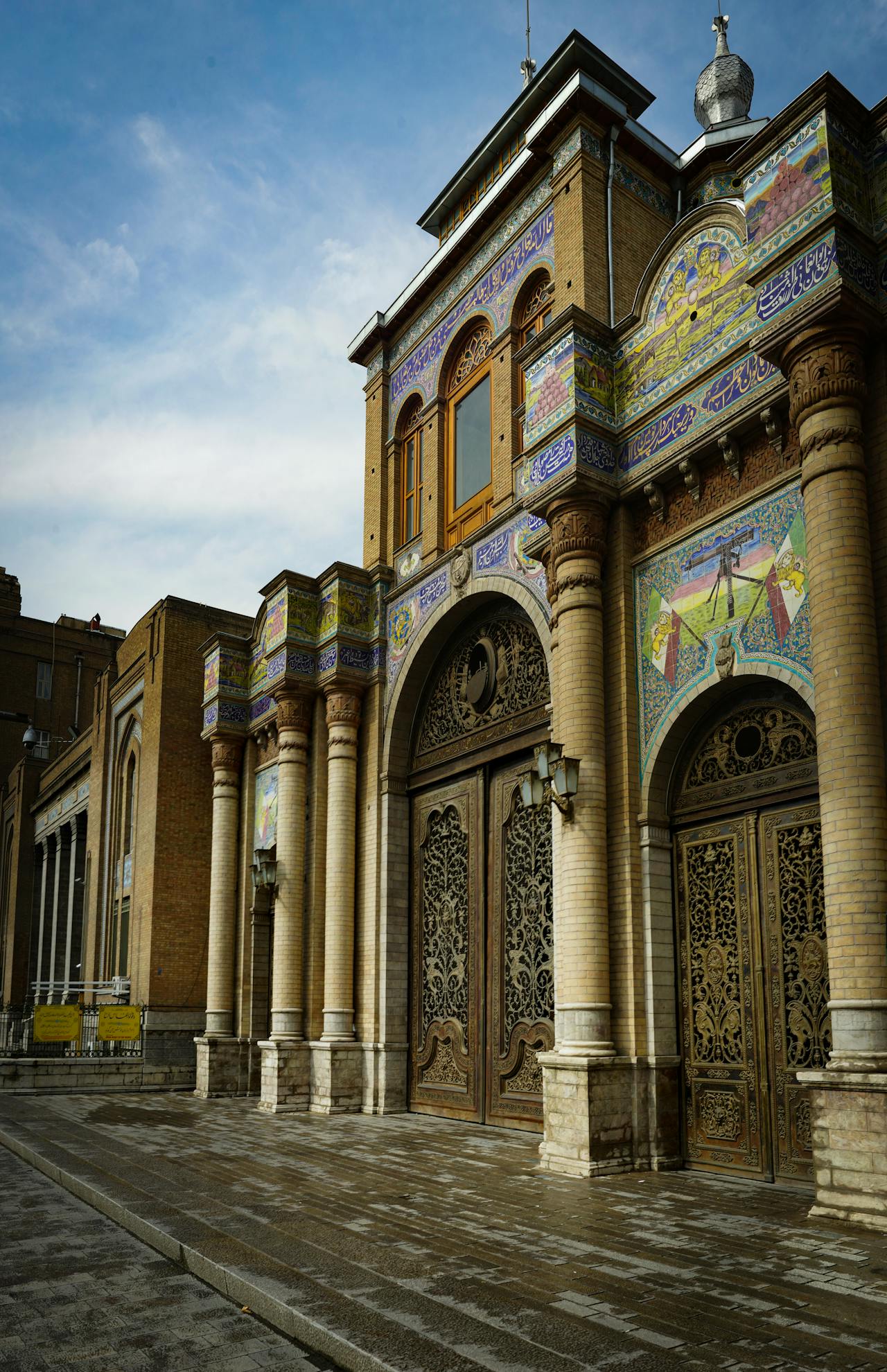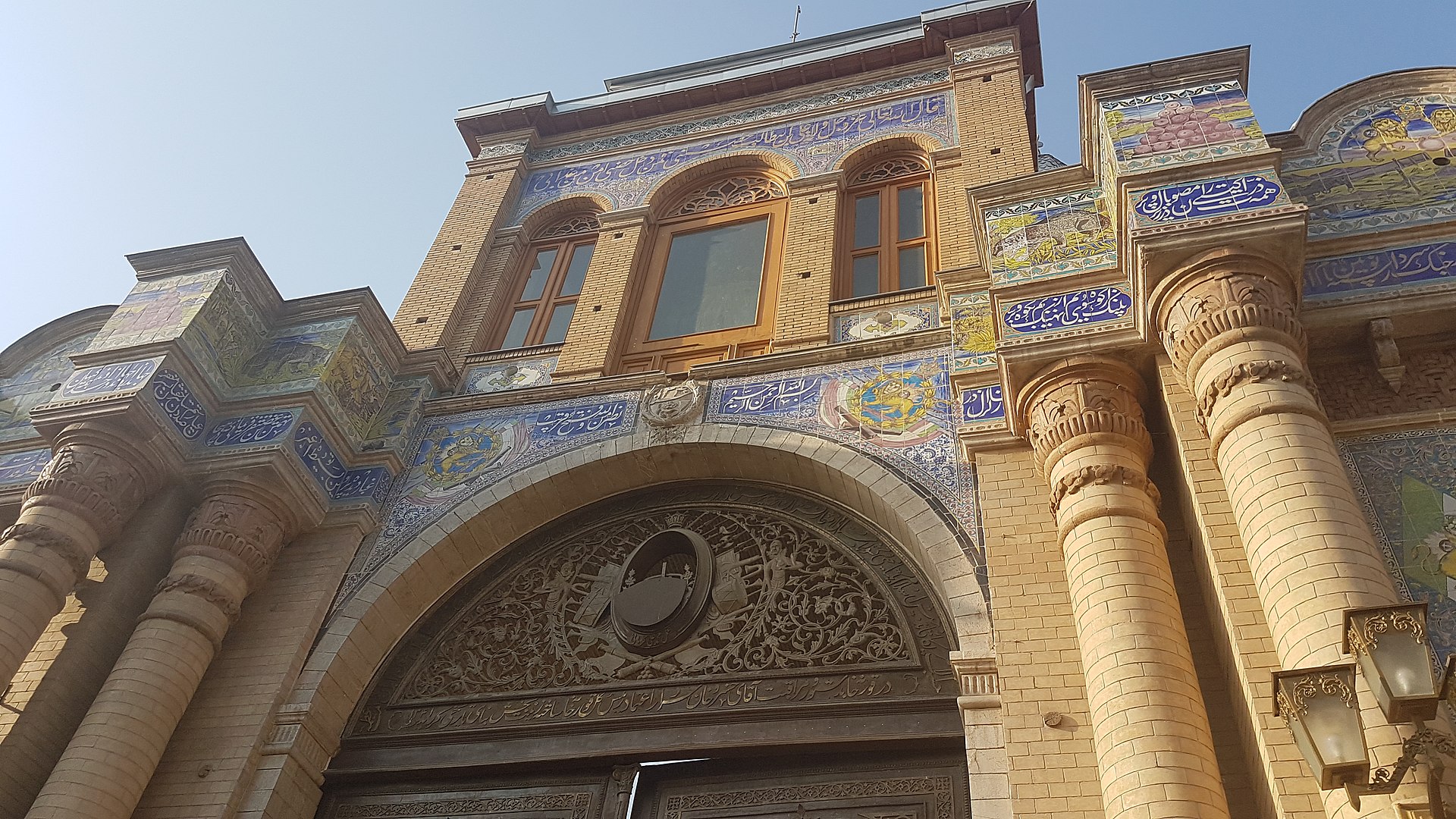
The Portal of Bāgh-e Melli, also known as the National Garden Gate, is one of Tehran’s most symbolic urban thresholds. Built in the early 20th century, it once marked the entrance to a large public garden and military parade ground, positioned between the old city and newly emerging modern districts.
Architecturally, the gate reflects a moment of transition. Its form combines Iranian decorative traditions—tilework, inscriptions, and symbolic motifs—with early modern state imagery, including references to national identity and modernization. Rather than serving as a monument to a single ruler, the gate represents a broader shift in how public space, authority, and the city itself were imagined.
Today, the portal stands largely alone, its original garden absorbed by surrounding institutions and streets. This isolation gives it particular power: it functions less as an entrance than as a marker of passage, reminding visitors of a time when Tehran was redefining itself through architecture and urban planning.