
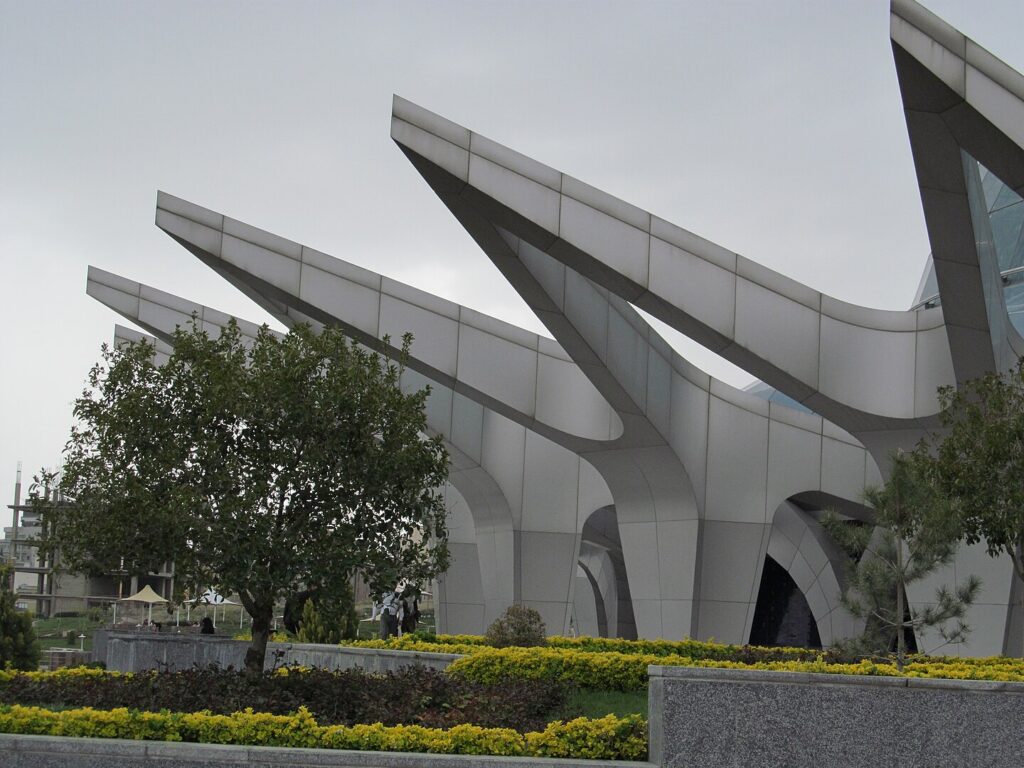
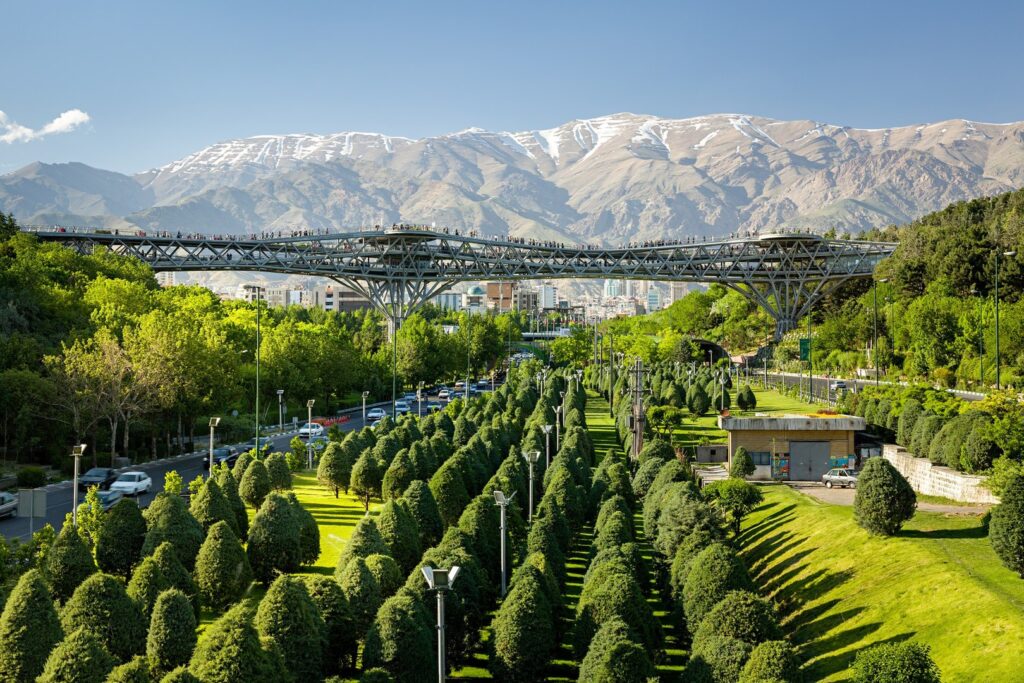
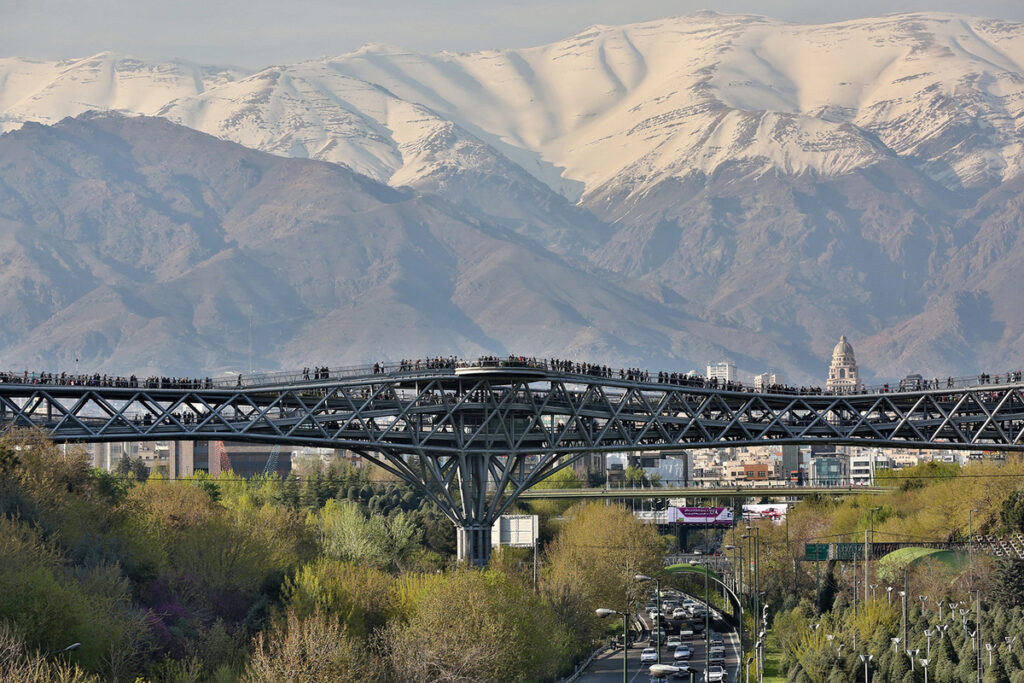
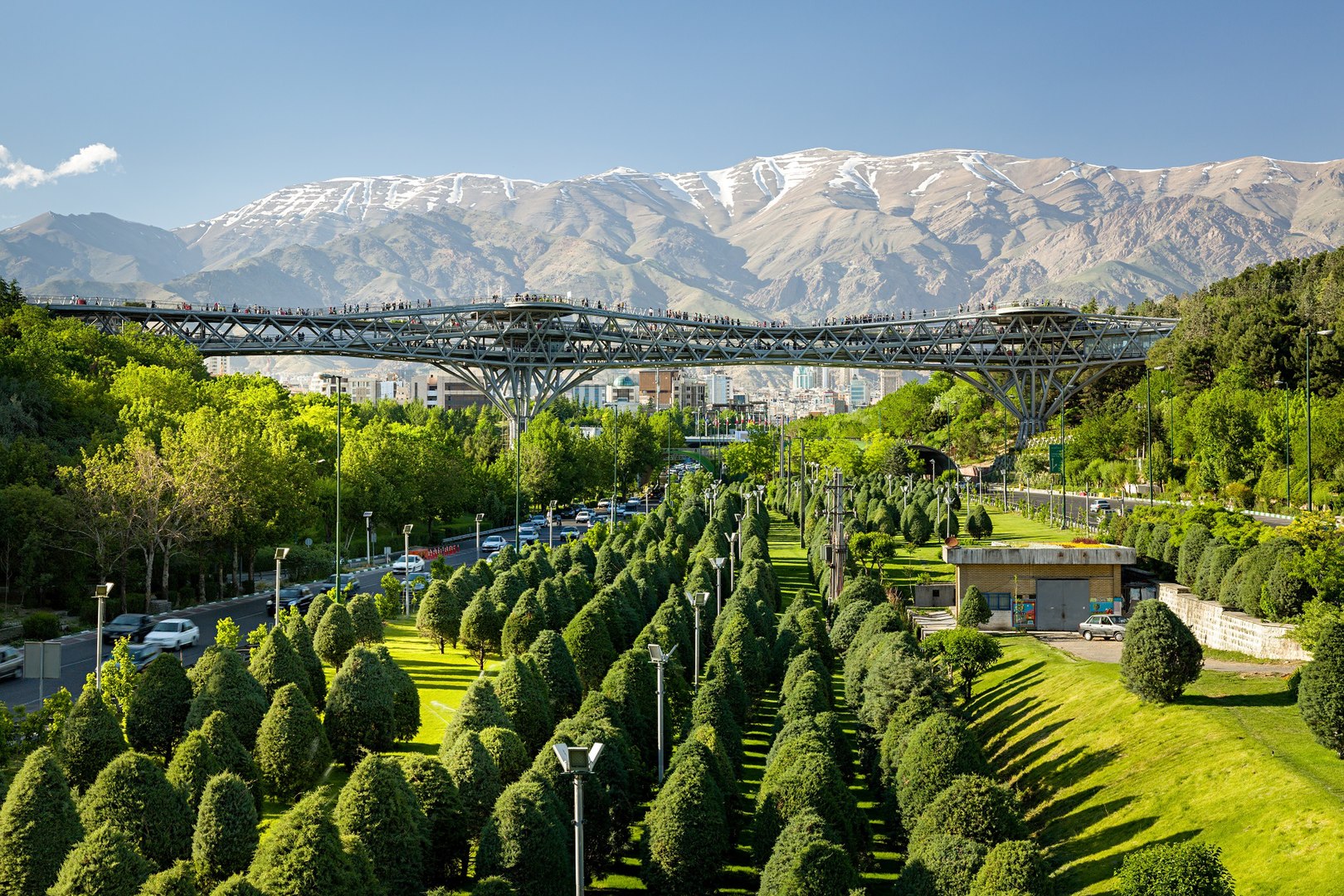
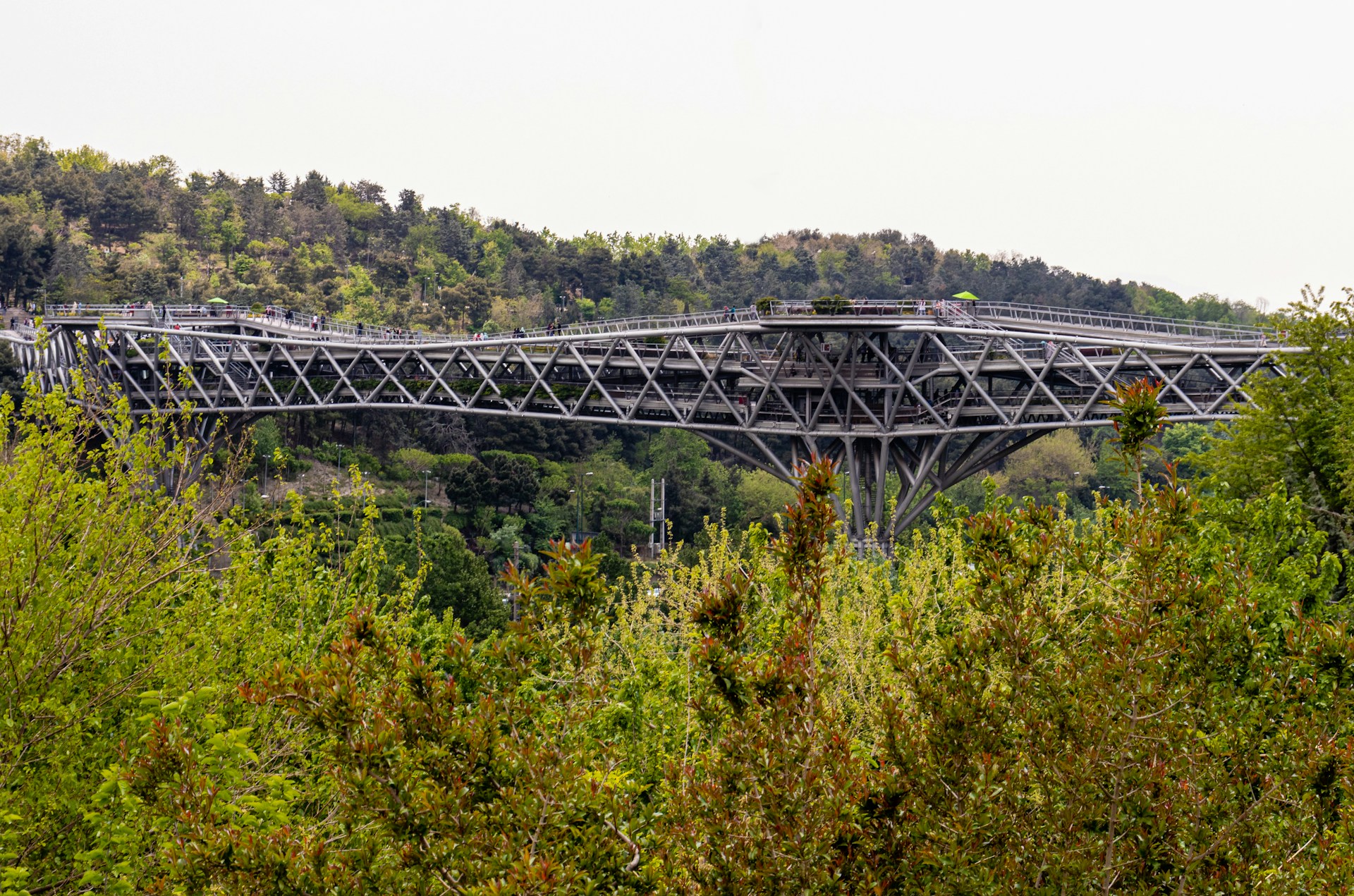
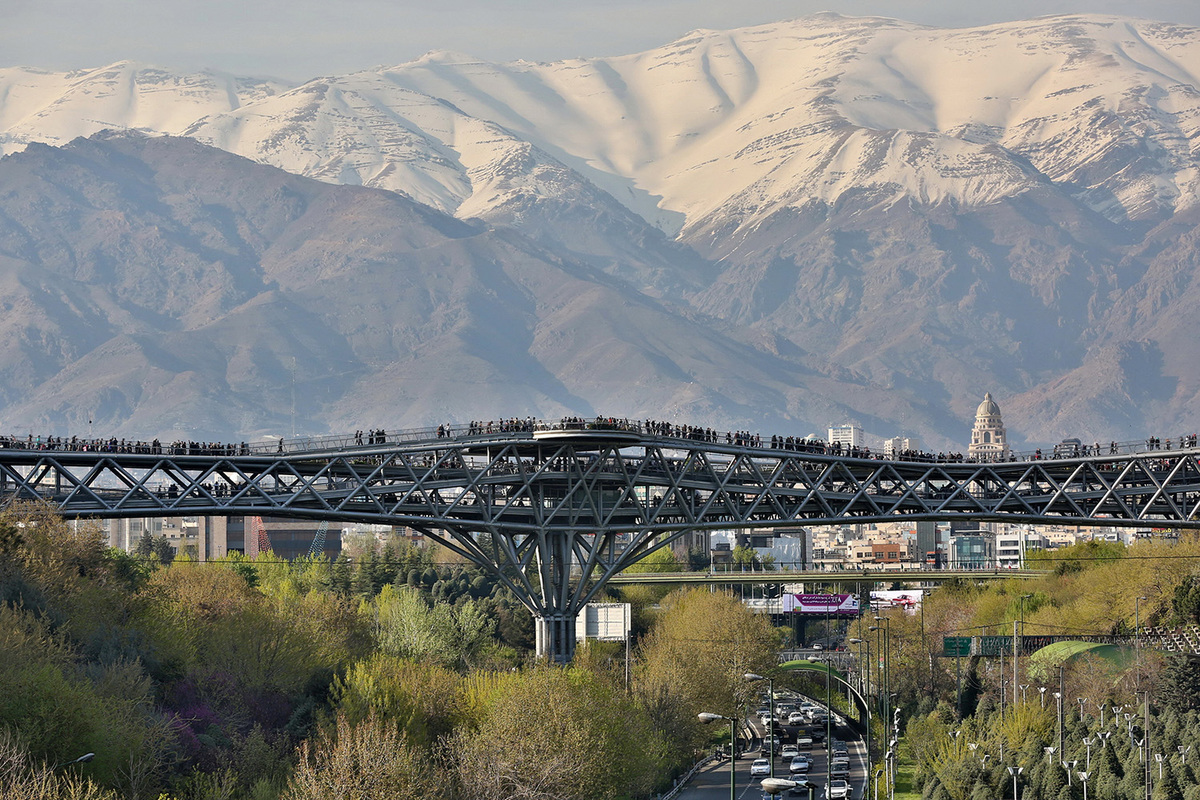
In northern Tehran, Tabiat Bridge links Ab-o-Atash Park with Taleghani Forest Park, creating one of the city’s best contemporary public spaces. Together with the nearby Art Garden, this area shows a different side of Tehran: designed for walking, sitting, meeting friends, and enjoying the city at a slower pace — above the traffic, surrounded by greenery, and framed by mountain views.
Photos by: Mohammad Mahdi, Mohammad Moradi, Wikipedia, Sam, Aga Khan Trust for Culture
Tabiat Bridge
HISTORY
Tabiat Bridge was completed in the early 2010s as part of a wider push to improve Tehran’s public spaces and pedestrian life. Designed by Iranian architect Leila Araghian, the concept was developed when she was still in her mid-20s — a rare achievement given the scale and visibility of the project. The bridge design was selected through a national architectural competition, and her proposal stood out for treating the bridge as a place to stay, not just a shortcut from one side to the other.
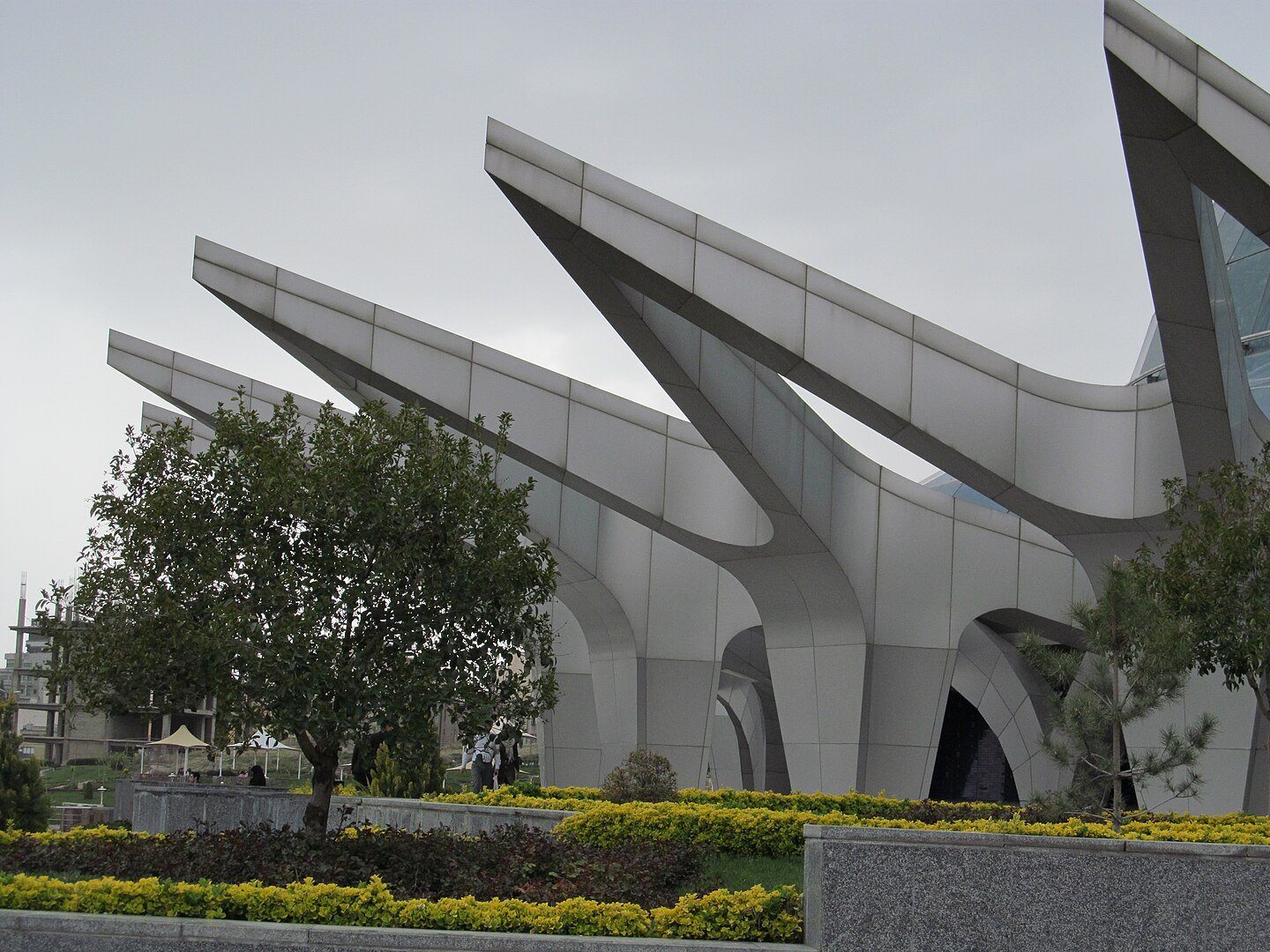
Before the bridge, Ab-o-Atash Park and Taleghani Forest Park were divided by a major highway, making the area difficult to experience as a continuous green zone. Tabiat Bridge reconnected the parks and introduced a new type of urban structure: pedestrian-first, view-driven, and social by design. The nearby Art Garden developed around the same period, reinforcing the area’s role as a contemporary cultural and recreational district.
WHAT MAKES IT SPECIAL
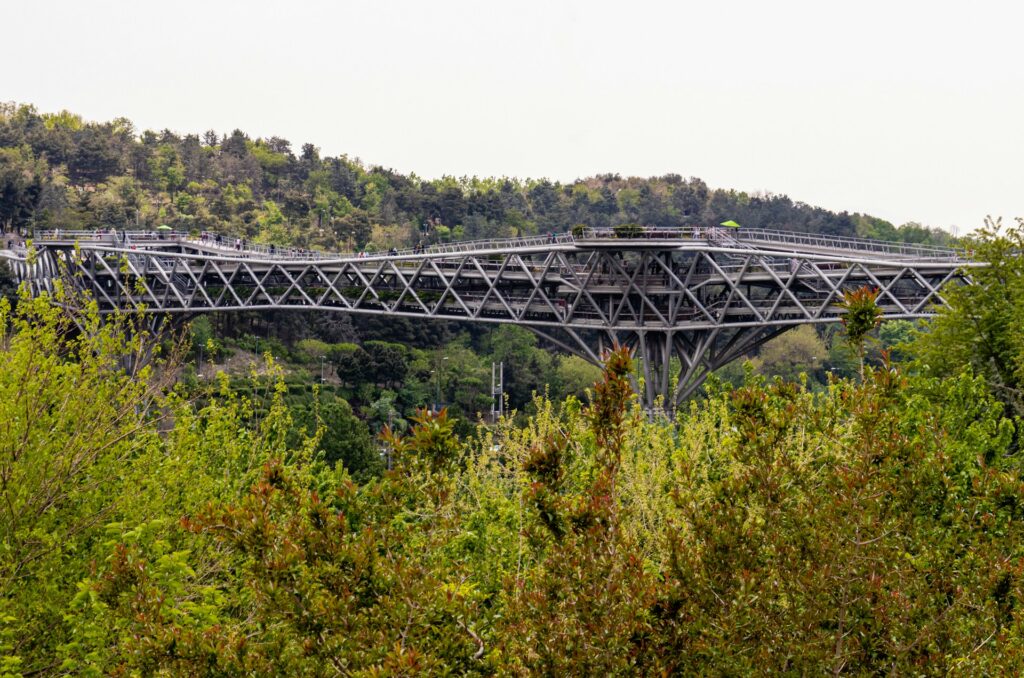
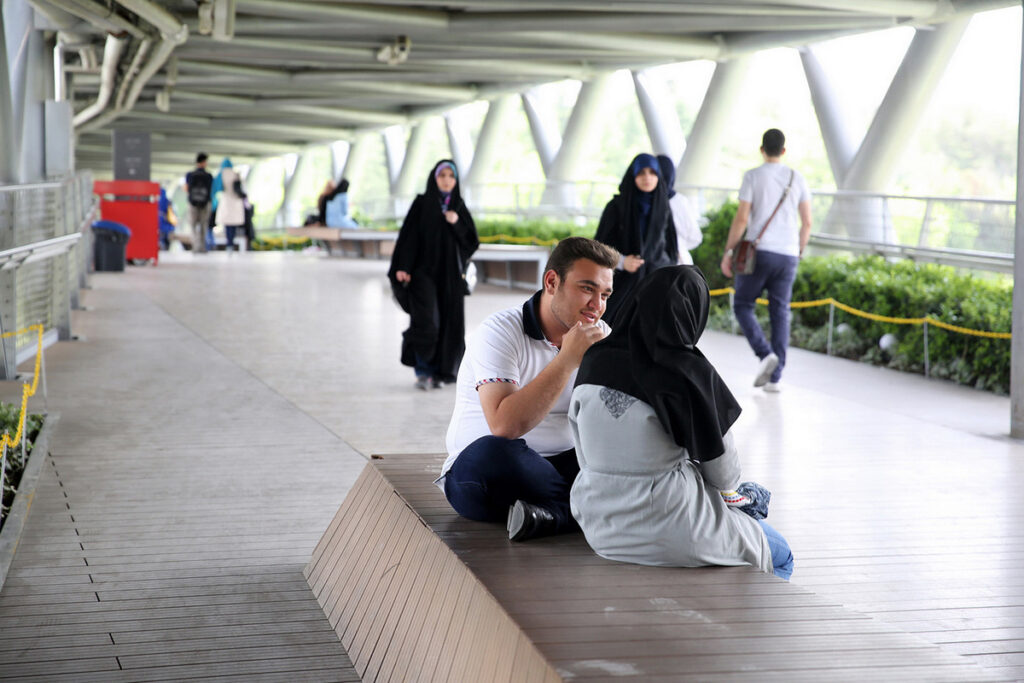
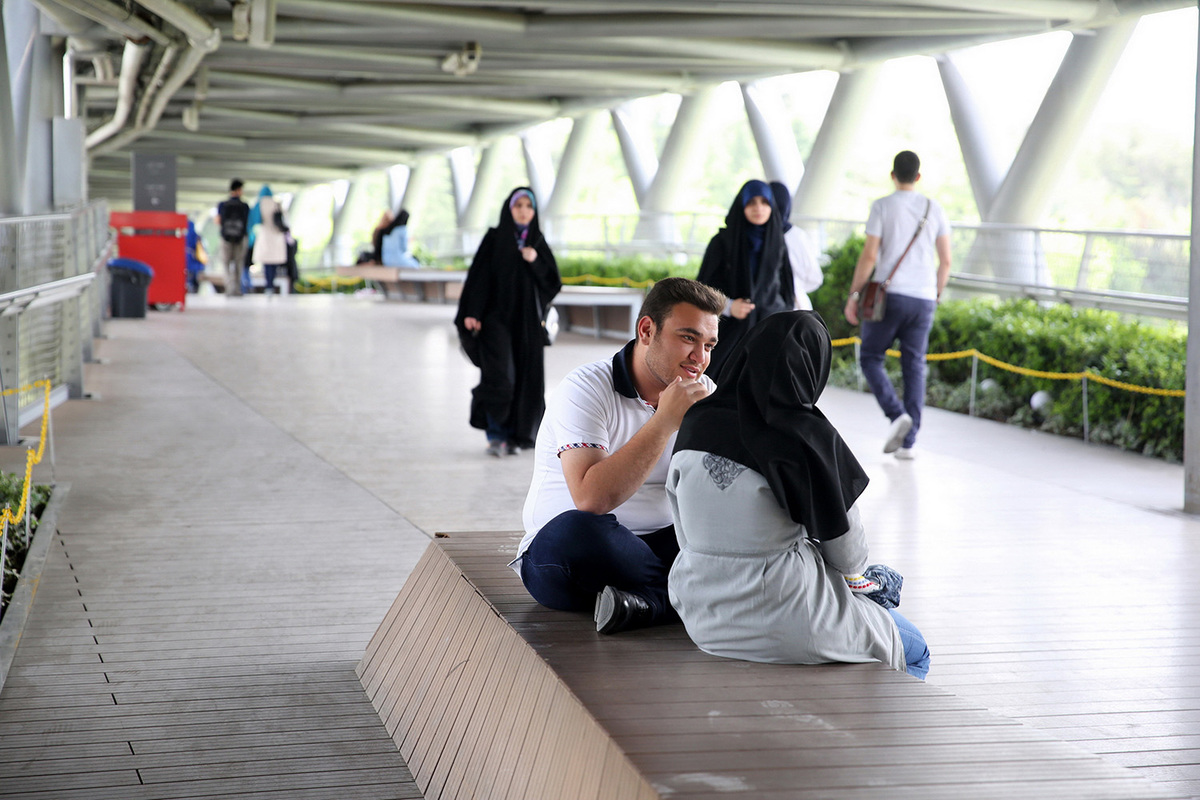
What makes Tabiat Bridge exceptional is its human-centered design. The structure widens and narrows to create platforms for sitting, stopping, and looking, with layered walkways that encourage visitors to linger. Cafés and seating areas turn the bridge into an elevated public space rather than pure infrastructure.
The experience is built on contrast: cars and highways moving below, greenery and calm above, and the Alborz Mountains in the distance. Ab-o-Atash Park adds an energetic, local atmosphere with open plazas and gathering spaces, while the Art Garden brings cultural depth through exhibitions and creative venues. Together, they form a rare sequence where architecture, landscape, and everyday city life blend naturally.
PRACTICAL TIPS
- Best time to visit: Late afternoon to evening, especially around sunset
- Plan 1–2 hours (longer if you stop at cafés or exhibitions)
- Closest metro: Shahid Haghani (Line 1)
- Evenings are lively, especially on weekends
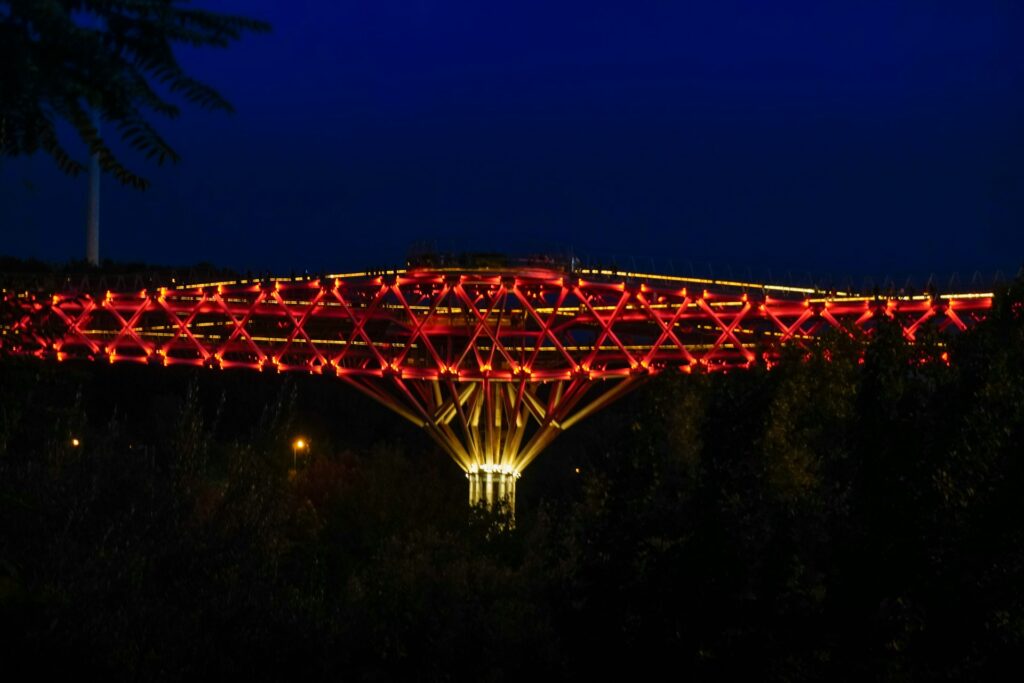
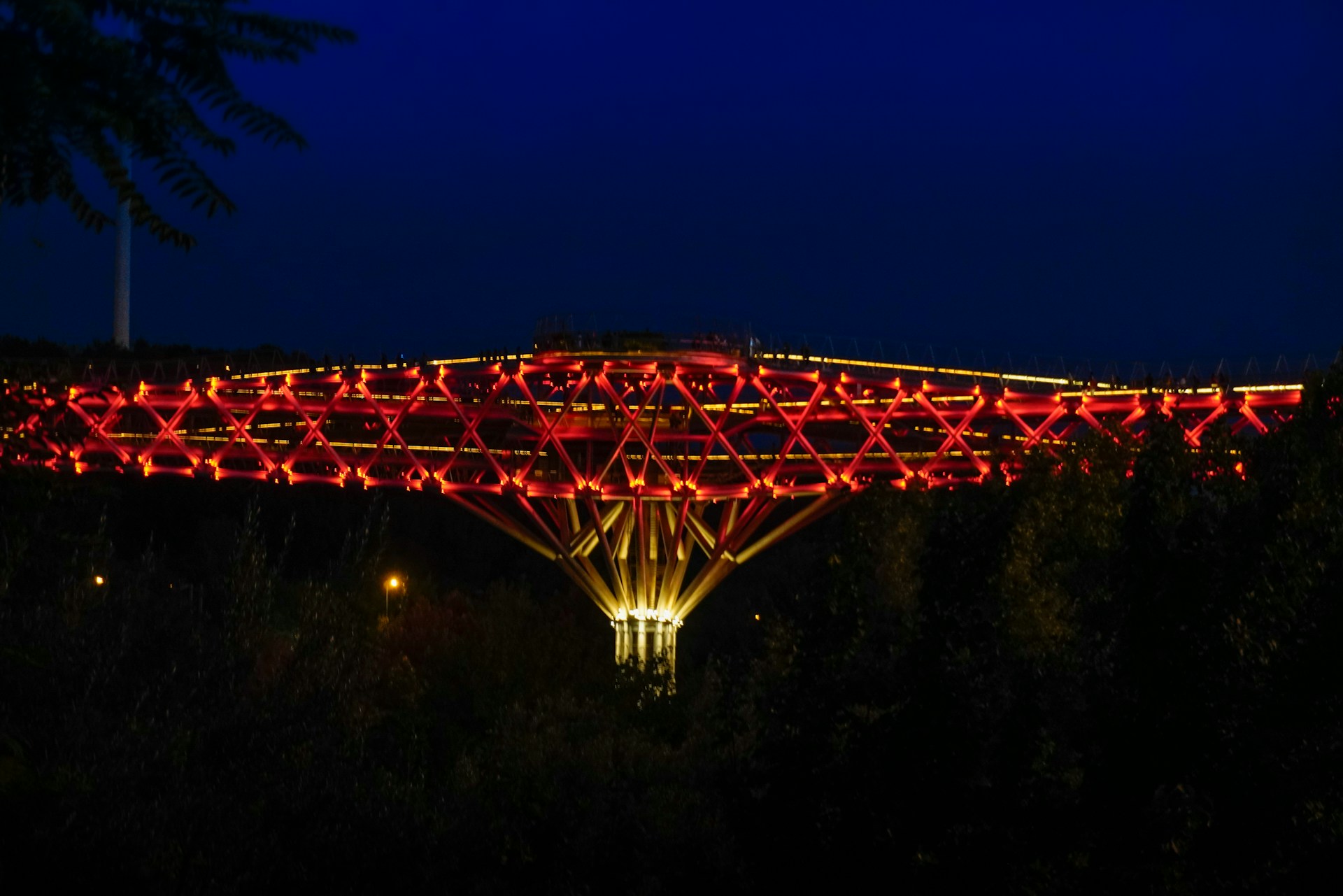
- Great for photography at dusk and after dark
- Great place to enjoy urban culture
NEARBY
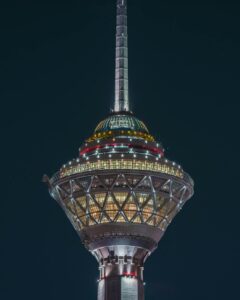
Milad Tower
A modern landmark rising above Tehran, Milad Tower combines city views, exhibitions, and leisure spaces, reflecting the capital’s contemporary ambitions and skyline.