Photo by Me
Iran is an incredible country to explore with your own vehicle — whether you’re traveling by motorcycle, car, van, or full-size RV. A quick look at the map shows just how vast Iran truly is, with countless landscapes and regions far beyond Isfahan, Yazd, and Shiraz. Having your own transportation gives you the freedom to fully experience the country at your own pace.
Site Content
⯈Important Info
⯈Areas to Avoid
⯈Getting Gasoline or Diesel
⯈ Vehicle Insurance
Related Reading
⯈ Carnet de Passage for Iran
Important Info
- Road Culture: Traffic is fast, lane discipline loose, and drivers often improvise. Drive defensively and avoid night driving or entering large cities during rush hour. Compared to Europe, traffic feels chaotic; compared to Afghanistan, Pakistan, or India, it’s relatively easy.
- Road Quality: Highways are generally good. Rural and mountain roads may be narrow, unlit, or include potholes and unmarked speed bumps.
- Checkpoints: Common but friendly. Officers usually ask only for passport and visa. Be cautious of civilians without any official insignia asking for documents — this may be a scam.
- Traffic Fines: Speed cameras and police with radar exist, but foreigners are rarely stopped.
- Safe Parking: Use supervised parking lots in cities — they’re cheap and secure. Confirm opening hours. Wrong parking can lead to towing or wheel-clamping, especially in cities. Many hotels offer secure parking or can tell you where to leave your vehicle.
- Sleeping in Your Vehicle: Overnighting in a van is generally accepted. Choose quiet spots away from major roads.
- Navigation: Important road signs are in both English and Farsi. Learning some Persian helps. Offline maps work well; combine an Iranian SIM with offline GPS for remote areas.
- Highway Tolls: Toll roads use automated e-tolling. Foreign vehicles are not registered in the system and can therefore use the highways for free.
Areas to Avoid
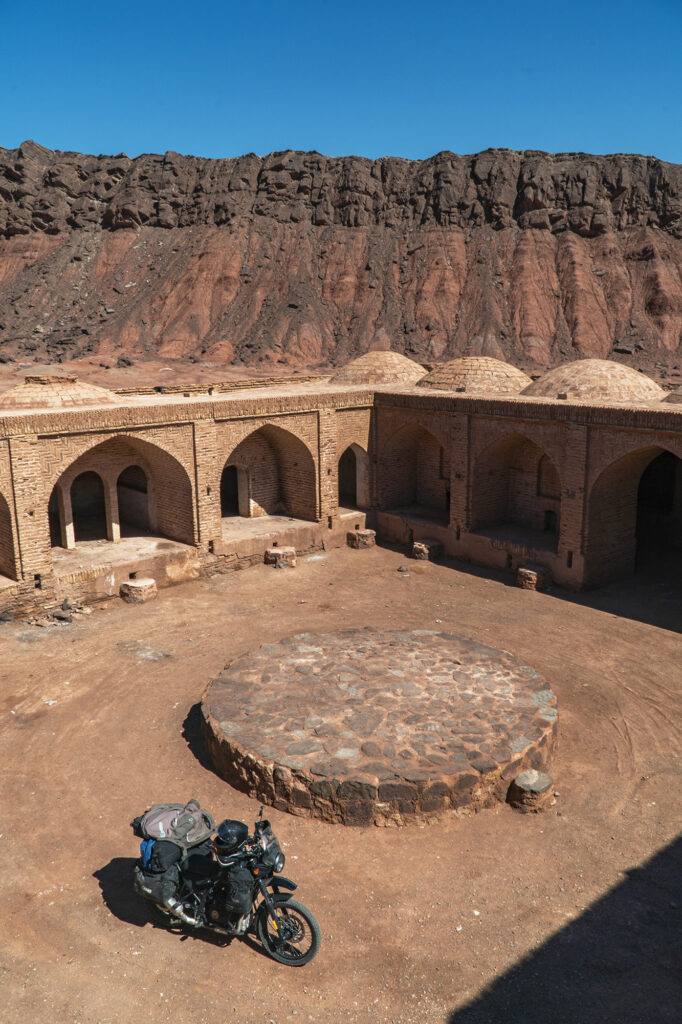
Almost no land in Iran is fenced, which means you can roam freely in countless places. Travellers leaving the main roads are rewarded with unexpected discoveries: hidden castles, ancient caravanserais, forgotten forts, and old fire temples scattered across the landscape. There are, however, a few important rules to keep in mind:
- Avoid all security areas such as police or military sites, border zones, and critical energy infrastructure.
- Some national parks restrict vehicle access, and you may need permission or a guide to enter by car.
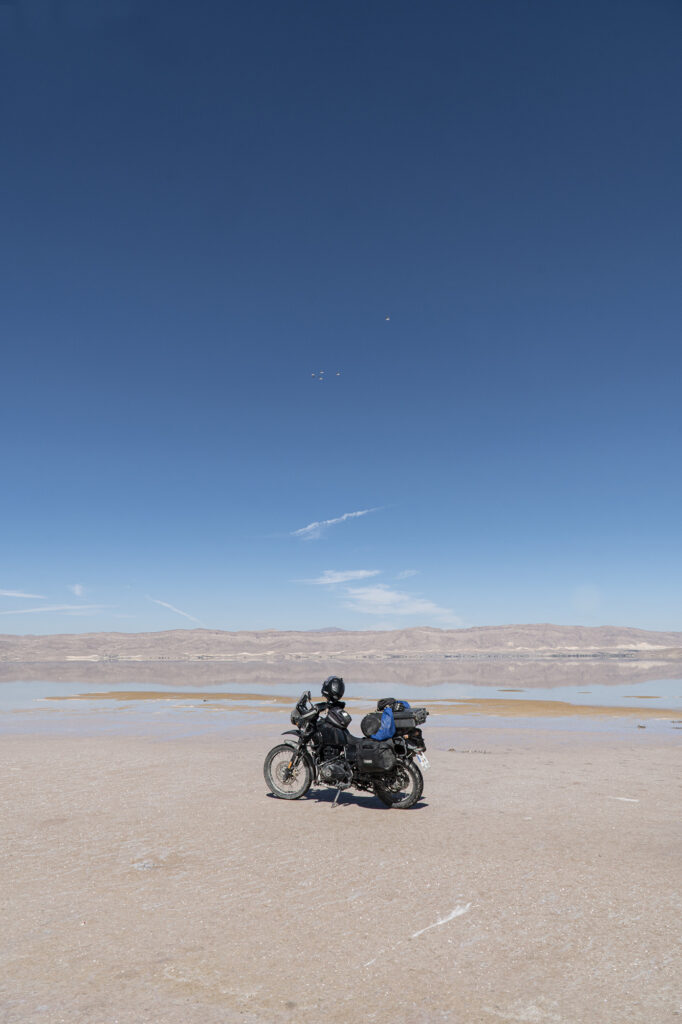
- Iran’s deserts are truly vast, with no infrastructure or phone signal. Unless you know exactly what you’re doing and are properly equipped, do not venture deep into desert regions. The Maranjab Desert near Kashan is officially off-limits to foreign vehicles.
- Traffic in the area south of Zahedan in the Sistan and Baluchistan province is particularly dangerous due to fuel smugglers racing narrow mountain roads. Be extra cautious when driving there and avoid being on the road by night.
- If you have the impression you may be in an area you are not supposed to be, stop and ask. You can use your action camera while driving. But it’s a good idea to take it off in areas which appear sensitive. Read more on filming in Iran here.
Getting Gasoline or Diesel
Driving is the preferred way of getting around for many Iranians — not surprising given that heavily subsidised fuel is cheaper than bottled water (Gasoline costs around 0.04€ per liter!!). You’ll find gas stations along main highways and city entrances. In smaller towns, ask locals for “pomp-e benzin”.
Getting Gasoline (“Benzin”)
All petrol stations in Iran are serviced — you usually do not pump fuel yourself. Iranians receive an even more subsidised monthly fuel quota using a fuel card. Foreigners can’t get one, but attendants can fill your tank instead. In remote regions or during fuel shortages, stations may impose limits, such as 8 liters per motorcycle or 20 liters per car. Rarely, a station refuses to sell without a card. In those cases, ask locals — someone will almost always lend their card.
Gas stations in cities often have a dedicated fuel pump for motorcycles only.
Getting Diesel in Iran
is more complicated because it is not sold without a fuel card at stations. Travellers use two options:
- A local’s card: Ask around at a fuel station — maybe someone is willing to help.
- Truck drivers (recommended): At rest areas, parked trucks often sell diesel at a fair rate. A good price is 10–15 cents per liter. Though less convenient than gasoline, it’s still extremely cheap
Further Info
- Paying for fuel. Iranians pay with domestic bank cards everywhere, including gas stations.
- Travellers can pay cash (but change is not always available) or use a tourist card for easier payment (info on getting a tourist bank card). Since fuel is already extremely cheap, small overpayments are rarely an issue for travellers.
- Roadside fuel. In rural and remote regions, people often sell gasoline from bottles or jerrycans. Make sure to negotiate the price first and ensure that the fuel is clean. Expect to pay a hefty markup on the price.
- Stations for Compressed Natural Gas (CNG), labeled in English, are common, they don’t sell anything else than CNG.
- Special Advise for Sistan & Baluchestan. The further south you travel, the harder fuel access becomes.The main reason is that fuel smuggling is widespread here, especially near the Pakistan border. Stations are fewer and fuel is harder to get. Here roadside fuel sellers (“bottle sellers”) are more common.
Vehicle Insurance
Vehicle insurance is mandatory for all vehicles entering Iran. Most international policies do not cover Iran, or only at a very high premium, so we strongly recommend arranging an Iranian vehicle insurance policy instead.
Iran’s mandatory policy is third-party liability insurance. It covers any injury or damage you cause to other people, vehicles, or property while driving. It does not cover damage, theft, or vandalism to your own vehicle — only third-party claims.
You can buy insurance at some, but not all border crossings. However, we do not recommend doing this: travellers often report scams, inflated prices, and long waiting times while the policy is issued. The next option is to visit an insurance office in one of the first cities after entering Iran, but similar issues may occur there as well.
For a smooth, hassle-free experience, we can arrange your official Iranian vehicle insurance before you enter the country. We work directly with a reputable national provider, and ensure all paperwork is completed correctly so you can enter Iran without stress.